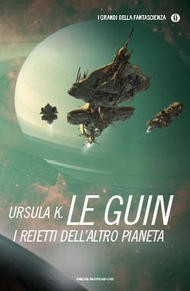

I reietti dell'altro pianeta

"C'era un muro... Come ogni altro muro, anch'esso era ambiguo, bifronte. Quel che stava al suo interno e quel che stava al suo esterno dipendevano dal lato da cui lo si osservava." Sui dei fronti del muro, due pianeti gemelli, Urras e Anarres, illuminati da uno stesso sole ma divisi da una barriera ideologica antica di secoli. Urras è fittamente popolato, tecnologicamente avanzato, ricco, florido, retto da un'economia liberista. Da qui sono partiti nella notte dei tempi i seguaci di Odo che hanno colonizzato l'arido Anarres, fondandovi una comunità anarchico-collettivista …

Paperback, 340 pages

Italian language

Published Aug. 16, 2014 by Mondadori.

Show more
ISBN:
978-88-04-64249-7
Copied ISBN!

View on OpenLibrary

Reviews

This novel is not about a utopia

At first I thought this novel was going to have a setting of utopia versus dystopia. However, the book goes much deeper than that. There isn't actually any kind of utopia presented really, because the book critically engages with the "utopian" anarchist society and interestingly highlights possible conflicts and issues within such a society as well. Philosophical themes are also explored in dialogue between characters, discussing moral dilemmas and societal issues, arguably making the dialogue the best part of the book with the world building being a close second.

Throughout the whole book you can also see conflict of opposing concepts, such as capitalism and socialism, rich and poor, past and present, individuality and society, hierarchy and anarchy, and the possessed and the dispossessed. Even the protagonists scientific theories attempt to unite two opposing concepts of time.

Altogether, an incredible book I cannot recommend enough, and unexpectedly funny at times too!

Enjoyable and thought provoking

I'm have only read this once before and remember thinking it was heavy which - while not putting me off re-reading - meant it never floated to prominence on my to-read list. This time I found it, not "lighter" per se, but something, certainly. Overall, it meant that I really enjoyed it in ways I wasn't expecting.

Structurally, I liked the interweaving twin timelines (in a book about the physics of simultaneity and the past, present and future being present together was a nice touch). And this theme was interesting to see having just read The River Has Roots and its riddles relying on the acceptance of a past, present and future.

But so much to think on freedom.